



“With breadth of vision and energetic daring, our publishing house must steer its course right into the torrent of contemporary thought,” wrote Plough’s founding editor, Eberhard Arnold.
Welcome to Torrents, a PloughStack column. Our first piece is a Lent and Easter playlist from Chris Zimmerman.
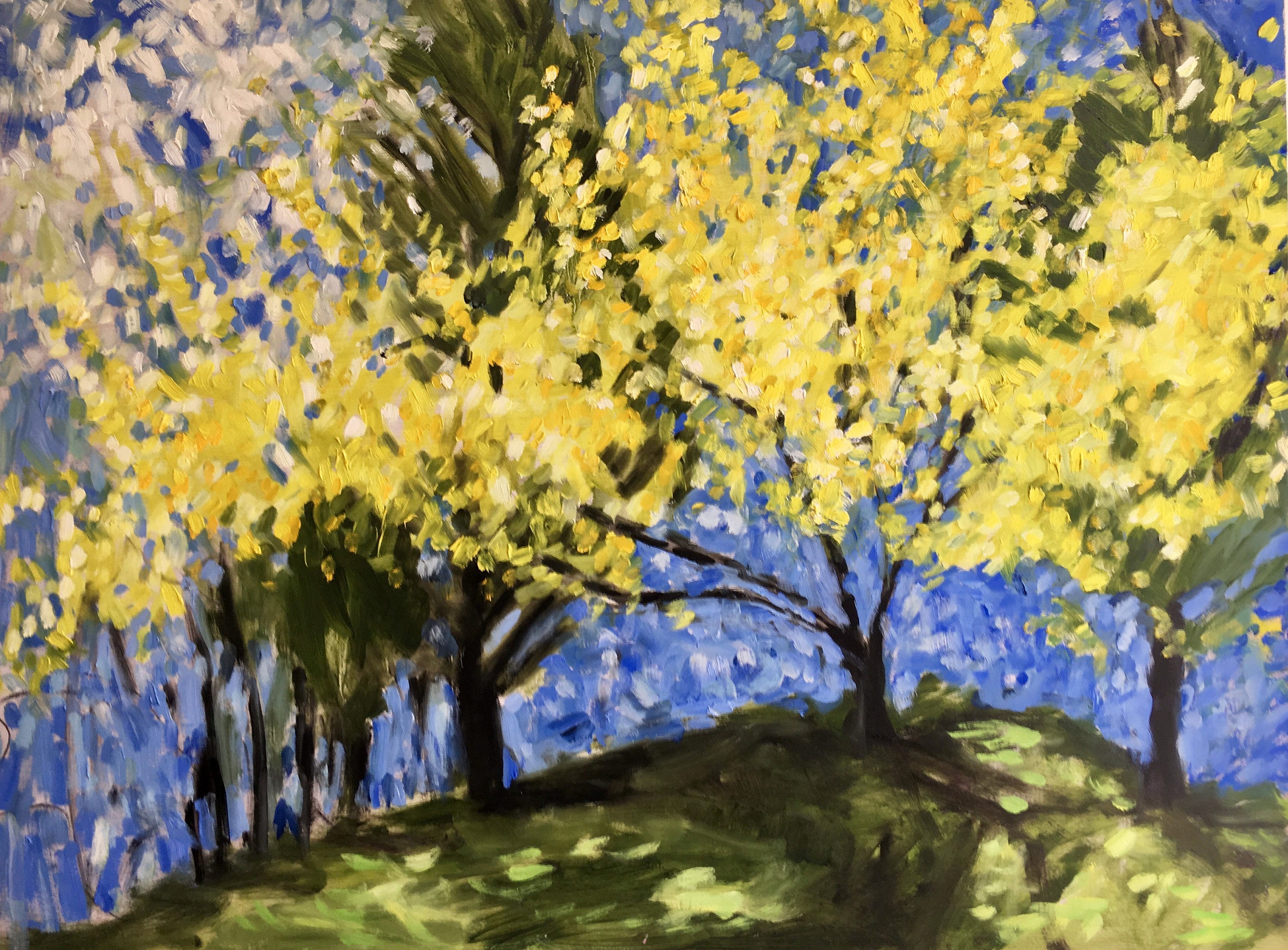
When it comes to the visual arts, the tradition of bringing the Easter story to life is every bit as rich as that which celebrates Christmas. Dozens of great painters and sculptors have left us a crucifixion, a Pietá, or both.
When it comes to music, however, the scales swing decisively in favor of Christmas. Still, there are plenty of options for Easter, especially if we consider larger choral works. Aside from Parts II and III of Handel’s Messiah, and Bach’s settings of the Passion according to St. Matthew and St. John, he left two shorter tributes to Holy Week – the ravishing Palm Sunday cantata (BWV 182) and the equally beautiful cantata for Good Friday (BWV 4) – as well as his joyous, trumpet-studded Easter Oratorio.
Then there’s the Stabat Mater, a stirring thirteenth-century poem attributed to Jacopo da Todi which describes Christ’s anguish on the cross, and Mary’s as she watches him, and ends with an extended plea for mercy directed to both mother and son. Wikipedia lists more than sixty composers who have set this classic text to music. Two bear special mention here: Antonin Dvorak, who penned his version in the aftermath of unimaginable personal tragedy – the deaths of his first three children – and left us a setting notable for its dramatic force; and Emanuele d’Astorga, an obscure eighteenth century Sicilian. His version, while modest in scope, shines with a melodic and harmonic radiance that has earned it a devoted following.
As for carols and hymns, there seem to be far fewer for Lent and Easter, than for Advent and Christmas. To fill that gap, I cobbled together a playlist that highlights several personal favorites.
Two other works that will reward the listener at this season are Joseph Haydn’s Seven Last Words of Christ (composed first for orchestra, and then reworked three times: for string quartet, for piano, and finally for soloists, chorus, and orchestra) – and Theodore Dubois’s oratorio by the same name. In addition to their heartfelt depiction of Christ’s suffering, both portray his promise of eternal life to the Good Thief, and the earthquake that convulsed Golgotha at the hour of his death.
As for carols and hymns, there seem to be far fewer for Lent and Easter, than for Advent and Christmas. To fill that gap, and to inspire an hour or two of contemplation (or relaxed listening) I cobbled together a playlist that highlights several personal favorites. If you’re ready to dive right in, the full playlist is below. For a more detailed introduction, keep reading.
My list opens with a piece that calls to mind Jesus’ triumphal entry into Jerusalem on what we now call Palm Sunday: Orlando Gibbon’s “Hosanna to the Son of David,” an early seventeenth century gem and a finely crafted example of polyphonic writing.
Next come two settings of “All In The April Evening,” a Victorian hymn from the English choral tradition. In it the writer, on seeing a flock of sheep, is reminded of the Lamb of God. The first setting is the original, for choir; the second is an arrangement for brass by one of the storied “colliery bands” that once dotted England’s industrial landscape and kept music – and a sense of community – alive in countless mining towns.
Three arrangements of Tchaikovsky’s poignant “Legend,” which relates an imaginative incident from the childhood of Christ, form the next set on my list. The first is for choir, in English translation; the second is a somber interpretation for brass. The third is a memorable rendition of the original, sung in Russian.
Next comes the “Merchant’s Carol,” a haunting oddity from The Oxford Book of Carols. In it a group of wayfarers comes across the crowd that welcomes Jesus into Jerusalem with loud hosannas – and later follows him to Golgotha. There, though he is now being mocked and humiliated as the “sport of men,” they are struck by his silent, noble bearing, and note that he was “most kingly dying.”
Also from The Oxford Book of Carols: another old English song, “The Moon Shines Bright.” Folk-like in its simplicity, it reminds us that “We shall never do for Jesus Christ / what he has done for us,” and that “The life of man is but a span / and cut down in its flower. / We’re here today, tomorrow gone, / the creatures of an hour.”
Jumping the Atlantic and several cultural divides, we come to the next two songs. Both traditional spirituals, they showcase the unparalleled artistry (and five-octave range) of the famed contralto Marian Anderson, first by means of “Ride On, King Jesus” and then by her dark, mournful delivery of “Were You There?”
It’s back to the Late Renaissance for the next piece, the final chorus of Heinrich Schütz’s 1666 Matthäuspassion (St. Matthew Passion). With solemn fervor rising from hearts pained by Christ’s sacrificial death, the choir thanks and praises him, then begs him to have pity “on us poor sinners.”
Mozart’s “Ave Verum Corpus” might be the musical heart of Good Friday – it is easily the best- known setting of a fourteenth century Latin poem honoring the “one true body,” which, fatal injuries notwithstanding, deserves eternal glory. Eucharistic in tone, it speaks of Jesus as our nourishment at the hour of death.
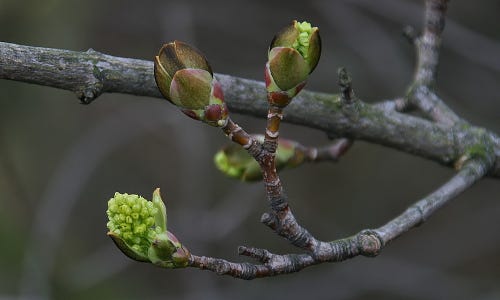
Johannes Brahms takes the stage next, with two classics from the Romantic Era: “In Stiller Nacht” depicts Christ’s silent night of anguish at Gethsemane, under a pallid moon; and “Magdalena” recounts Mary Magdelene’s encounter, early on Easter morning, with the risen Christ.
Next on the list is a pillar of the Passiontide canon: “O Haupt Voll Blut und Wunden” (“O sacred head, now wounded”). A sturdy Lutheran tune still sung in churches worldwide, it will be immediately recognizable to anyone familiar with the chorales that punctuate Bach’s St. Matthew Passion.
After this comes an old French carol, “Love Is Come Again.” If there is a song in this list for Holy Saturday (the day of Christ’s entombment), this would be it: the text is rife with biblical images – the grain of wheat that must be buried, and the new green shoot it sends forth, for example. It culminates in an expression of reassurance that “When our hearts are wintry, / grieving, or in pain, / Thy touch can call them / back to life again.”
“Christ Ist Erstanden” (“Christ Is Arisen”) is next. An ancient monastic chant, it was used by Bach as the compositional basis for his chorale “Christ Lag in Todesbanden” (“Christ Lay in Death’s Dark Prison”) and for his Good Friday cantata by the same name.
Once again jumping centuries and continents, the list takes us next to the middle of America’s folk revival, with Odetta’s “Ain’t No Grave Can Hold My Body Down.” Sung one moment with a mellow, yearning ache, and the next with grit – even a touch of defiant rage – this number was recorded live at Carnegie Hall in April 1960, with the choir of Harlem’s Church of the Master providing the back-up vocals, and Bill Lee (Spike’s father) on the double bass. It’s hard to think of a more rousing testament to faith in the Resurrection – Jesus’, and that of the human body generally.
It’s back to Tchaikovsky for the next piece, “The Angel Cried Out.” Borrowing a text central to the celebration of Easter in the Orthodox tradition (and based on a passage from the Gospel of John), the composer takes us with Mary to Christ’s grave, first in the half-light of dawn, and then in the brightness of an angel who – compellingly depicted by high sopranos – addresses the weeping woman and exhorts her to rejoice, since “He is risen from the dead!”
Rounding out our playlist, we have a sprightly German number, “Die Ganze Welt” (“The whole bright world rejoices now”); a soaring Dutch hymn tune “This Joyful Eastertide,” whose text is a finely-wrought poem by the Cambridge vicar George Ratcliffe Woodward; and “The Lord is Ris’n Indeed.” A joyous anthem composed by William Billings (1746–1800) a Bostonian of humble origins with no formal musical training, it brims with the confidence of its final lines: “Thine’s all the glory, man’s the boundless bliss.”
Finally, there is Randall Thompson’s perennially popular “Alleluia” (1940), a mid-century masterpiece of a cappella choral writing. Especially for those who traditionally avoid alleluias during Lent and Holy Week, they are all the more the announcement of the joyful season that begins at Easter.
Happy listening. And if I missed any of your favorites, send me an email.
Learn about Plough.
Subscribe to our magazine.
Browse our books.
 | A guest post by
|
Thank you so much for doing this and sharing your recommendations to discover!