



“Possibility is for the self what oxygen is for breathing,” wrote the philosopher Søren Kierkegaard. Meaning: when you can’t see a way forward for yourself or for the world, what you need is a sense that something new can happen, and that another life is possible.
Welcome to PloughStack’s Possibilities.
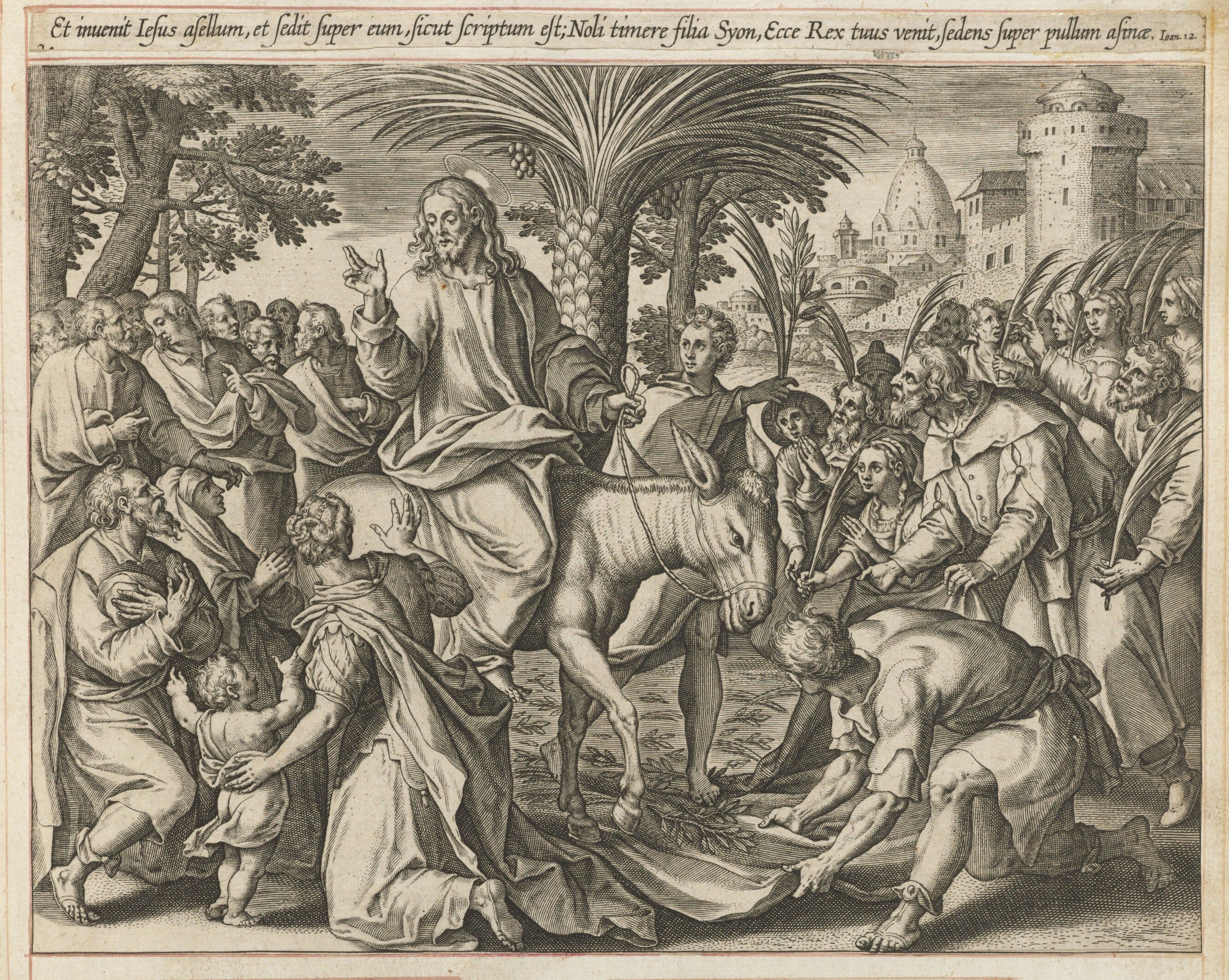
Wars and Rumors of Wars
It’s Holy Week, and millions of people around the globe are living through war.
The war in Iran shows no signs of slowing down with Kurdish forces poised to attack on the Western border of the country.
“We just have to put our boots on, and we’re ready,” said Rebaz Sharifi, a commander of forces under the Kurdistan Freedom Party. His party is one of several Iranian Kurdish groups driven from their homes throughout four decades of insurgent efforts against Iran.
Benoit Faucon argues that the mafia-esque structure of Iran’s government keeps it in control.
Iran’s sprawling security apparatus isn’t solely held together by ideology. It is underpinned by a system of economic incentives that make the regime’s collapse a direct threat to the livelihood of its acolytes.
Since its founding, the Islamic Republic has built a tentacled ecosystem that controls more than half of the economy and acts as a powerful protection policy for the regime. It rewards loyalists with cash and careers and other opportunities in exchange for crushing dissent and staying true to the regime, say academics and analysts who study the Iranian regime.
Gaza, Ukraine, and other war zones also drag on with no end in sight. Are these interminable wars the new reality? Linda Kinstler argues that they are.
The proliferation of cease-fires in the place of lasting settlements is a symptom of the pessimistic politics of our time. We have become so acclimatized to the age of forever wars that we seem to have forgotten to hope for true peace — that is, a positive peace, a peace with justice.
As Christ described in his prayer over Jerusalem, the world is full of violence and division.
O Jerusalem, Jerusalem, the city that kills the prophets and stones those who are sent to it! How often would I have gathered your children together as a hen gathers her brood under her wings, and you were not willing! See, your house is left to you desolate. For I tell you, you will not see me again, until you say, “Blessed is he who comes in the name of the Lord.”
(Matt. 23:37—39, ESV)
In the face of all this conflict and suffering, prayer is needed more than ever. We need to “put off sense and notion,” as Eliot writes, and “kneel where prayer has been valid.”
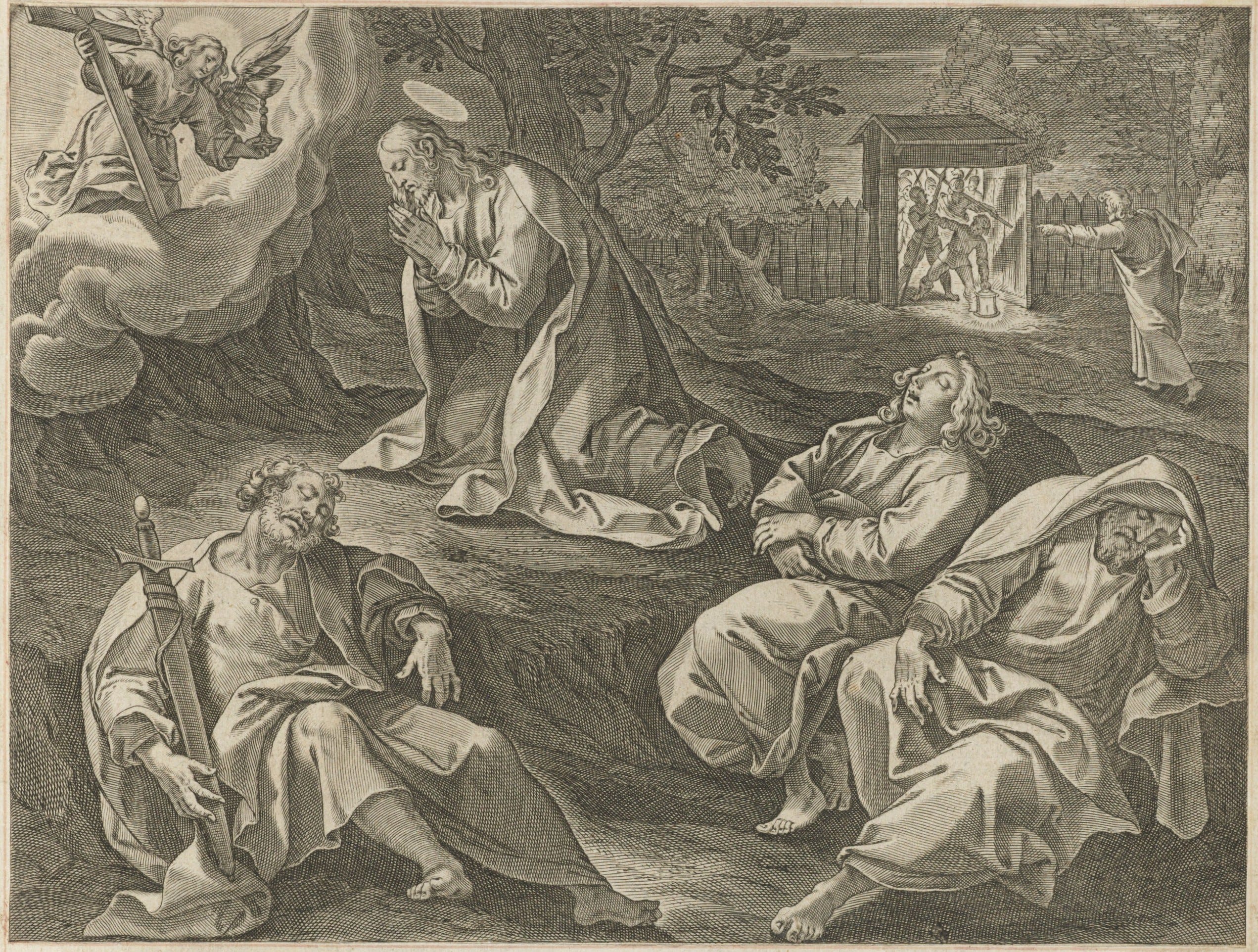
If you came this way,
Taking any route, starting from anywhere,
At any time or at any season,
It would always be the same: you would have to put off
Sense and notion. You are not here to verify,
Instruct yourself, or inform curiosity
Or carry report. You are here to kneel
Where prayer has been valid.
—“Little Gidding,” by T.S. Eliot
Pray Without Ceasing
Ukrainian theologian Taras M. Dyatlik grapples with the purpose of his unanswered prayers for peace in Ukraine.
We’re doing the same thing as the ancient psalmists – questioning God’s silence and wrestling with the hard questions. What do you do with your faith when prayers for a just peace seem to go nowhere? How do you make sense of God’s ways when you’ve been crying out for protection for four years and it feels like he’s not listening? How do you take those unanswered prayers and let them build your faith instead of destroying it?…
Perhaps unanswered prayers aren’t divine rejection but sacred invitations – calling us beyond simple prosperity into deeper partnership with God’s mysterious purposes? Jesus, how do we discover that your silence often cradles your most profound responses in the long nights of our souls and seemingly unheard prayers for peace?
Ellen Koneck recounts the pain of trying to pray after the death of her brother.
I suppose I knew that God was in the dark room with me, or was the dark room, surrounding me. I knew that God sat, quiet, still, almost absent, almost dead, inaudible breath but yet alongside me. God who died and teeters near death with us. God who mourned and continues to mourn with us. My only God, the only God I could bear or bother with. I beckon her, my former, faithful self, to join me here, to trade in language and ritual and everything we’ve known for this beatific blackness.
Dorothy Day writes that prayer is a fitting response to every situation.
I have been overcome with grief at times, and felt my heart like a stone in my breast, it was so heavy, and always I have heard, too, that voice, “Pray.”
What can we do? We can pray. We can pray without ceasing, as Saint Paul said. We can say with the apostles, “Lord, teach me to pray.” We can say with Saint Paul, “Lord, what wilt thou have me to do?” (Acts 9:6).
Graham Tomlin describes the new found faith of Blaise Pascal
The first thing apparent in Pascal’s new intensity of faith is an instinct to pray…
The whole account is in the form of a prayer. Pascal’s is an encounter, not with the God of the philosophers, the divine architect of the universe, a God at the end of a logical argument, but the God of Jesus Christ, who, as C. S. Lewis once put it, is “alive, pulling at the other end of the cord, approaching at an infinite speed, the hunter, king, husband.”
Rabbi Abraham Joshua Heschel pushes us to see prayer as more than just an intellectual exercise:
The goal of prayer is not to translate a word but to translate the self; not to render an ancient vocabulary in modern terminology, but to transform our thoughts into thoughts of prayer. Prayer is the soul’s imitation of the spirit, of the spirit that is contained in the liturgical words.
Fyodor Dostoyevsky’s Father Zossima reminds us to
be not forgetful of prayer. Every time you pray, if your prayer is sincere, there will be new feeling and new meaning in it that will give you fresh courage, and you will understand that prayer is an education …
At some thoughts one stands perplexed, especially at the sight of people’s sin, and asks oneself whether one should use force or love and humility. Always decide to use humble love. If you resolve on that once and for all, you may subdue the whole world. Loving humility is marvelously strong, the strongest of all things, and there is nothing else like it.
Plough-Share
Reader Susan Lipps reflects on Karen Kilby’s essay on how Christians ought to respond to the church’s decline with a metaphor from the world of viticulture:
Every year, the farmer (vinedresser) cuts off branches that have served their purpose. They have been fruitful. But, here's the thing: the farmer always leaves two buds at the base of the cane for the next year's harvest. There is a particular sadness in seeing the canes piled up in the middle of the rows and the vine standing bare and exposed. But, if you get up close, you will notice that the farmer has been quite careful in the pruning to leave hope for the future harvest. There is much more to say, but holding sadness and hope together is seen in this metaphor. We can hold them both together, and they do not cancel each other out.
Do you have any comments or questions – or new possibilities? Send them our way: