


“With breadth of vision and energetic daring, our publishing house must steer its course right into the torrent of contemporary thought,” wrote Plough’s founding editor, Eberhard Arnold.
Welcome to Torrents, a PloughStack column.
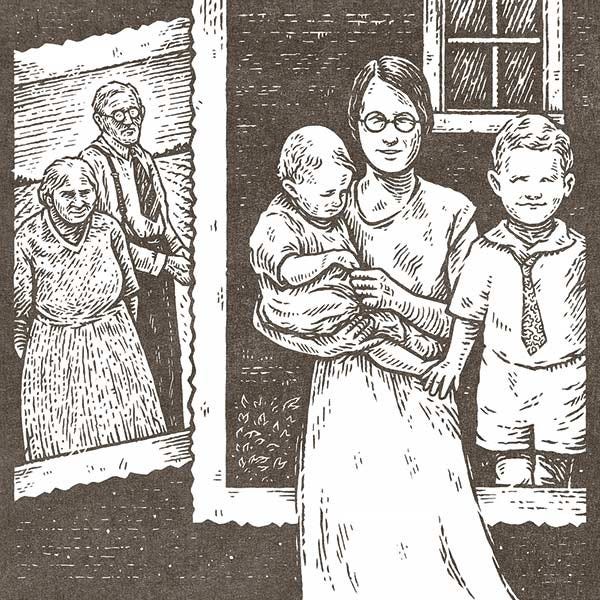
The Partition Thins
Six New Poems
By Jane Clark Scharl
The word “verse” has an agricultural past: it comes from the Latin word for “furrowing” or “turning up the soil.” Language, then, is a field ready for the plow; a poem is the careful turning up of that field. A poem must break up the dry outer crush of assumptions to expose the fertile soil underneath.
Wendell Berry, who died yesterday at the age of ninety-two, is well-known for many things. He is an essayist and novelist, a life-long farmer, and a great champion of the particular and human against impersonal, mechanized social and economic forces. He is also a masterful poet. For over sixty years, Berry has turned to verse to explore the rhythms and patterns that make up human life.
Last year, Berry sent us six poems that he wanted us to publish. In this series of poems, the guiding concerns of his life merge. Here plowing (and not just in a metaphorical sense – remember, Berry actually plows actual fields) turns up the field of memory and gives us a glimpse of the beauty that comes when we love a place and its people particularly and deeply.
The poems stand in relationship with each other. The fields of one poem become fertile soil for a meditation on language in the next, which in turn yields a prophetic vision in which “On the other side of the partition / the dead are living.”
The inevitable but startling unfolding of the poems and their interrelated themes is more than an imaginative discovery; it is a moral one. Throughout these poems, the speaker explores his changing relationship to the world he has loved with all his might. He discovers that even though he cannot stop time or keep the fields and land and the people he loves, he need not despair. Here is the final great turning of these poems: a turning away, at the last, from the things of this world only to discover that the things he has loved have been kept safe, “more alive, more essentially themselves,” on the other side of death. Perhaps, these poems suggest, death itself is simply another turning of the soil.
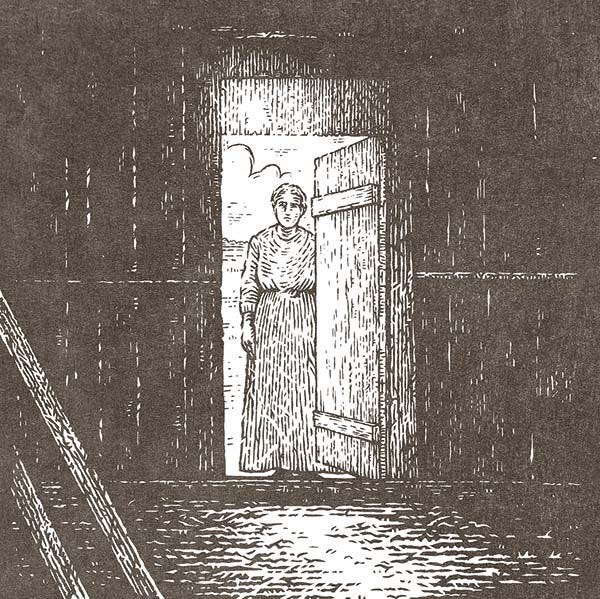
Can Love Take Sides?
The law of love excludes no one, but requires a choice from everyone.
By Wendell Berry
I recommend second thoughts about the possibility of a “side” of love, but current political rhetoric tends toward such an absolute division. The side of hate is composed of avowed racists; avowed racists have espoused an absolute, unexcepting prejudice against a kind of people; and so they may be called “the side of hate” rightly enough. That haters hate is morally as straightforward and uncomplicated as it can be. But they themselves are perceived by the side of love as a kind of people. And the side of love, as perceived by the side of hate, is a kind of people also, another kind.And so we have a confrontation of two opposite kinds of people, lovers and haters, each side as absolute in its identity as it can make itself, and they do not know each other. They cannot imagine each other. For the haters, this situation is wonderfully simple and entirely acceptable. They don’t need even a notion of consequence. They are there to oppose. That is all. The lovers, on the contrary, have everything at stake and the situation is clouded by moral danger.
Because the confrontation is between two categories of people who do not know each other, it will be easy for the side of love first to understand love merely as opposite and opposed to hate, and then to generalize this opposition as an allegorical battle of Love versus Hate, exchanging slogan for slogan, gesture for gesture, shout for shout. Then if nature and the rule of battle go unchecked, the side of love begins to hate the side of hate. And then the lovers are defeated, for they have defeated themselves. They have fallen into the sort of trap that Mr. Jefferson set for, among others, himself. If you say, “All men are created equal,” then adding “except for some,” the exception overturns the rule, and a great deal else along with it. Just so, love that hates has canceled itself. It cannot survive its hatred of hate any more than one can survive minus one. It is no more. Chaos and old night have come again.

With us, love has been reduced mostly to a popular word, easy to use to intensify a frivolous appreciation. “Oh, I love it!” we say when told of something really cute. Or it can be used as a handy weapon against the haters of whom we disapprove. Too bad. But love comes into our civilization – the Gospels being the source best known to me – as a way of being in the world. It is a force, extraordinarily demanding and humbling, dangerous too, for those who attempt to take it seriously.
As a force and a way of being, love is never satisfied with partiality. It is compelled, by its own nature and logic, to be always trying to make itself whole. This is why the Sermon on the Mount tells us to love our enemies. That is an unconditional statement. It does not tell us to fight our enemies in order to improve them or convert them by our love.
In practice, this commandment seems to cancel or delete “enemy” as a category of thought.
Read the rest of the essay here.
Do you have any thoughts, memories, or reflections on the life and work of Wendell Berry? Please tell us about them by commenting below!
Learn about Plough.
Subscribe to our magazine.
Browse our books.